
In today’s highly competitive and innovation-driven market, the visual appeal of a product plays a crucial role in attracting customers and establishing brand identity. From the sleek design of smartphones to uniquely shaped packaging, a product’s appearance often influences its commercial success. As a result, protecting these visual elements has become just as important as safeguarding technical functionality.
This is where design patent filing (known as design registration in India) becomes essential. It provides legal protection for the aesthetic aspects of a product, preventing unauthorized copying or imitation by competitors.
In this blog, we offer a comprehensive and practical guide to design patent filing in India, covering its meaning, legal framework, process, requirements, benefits, and expert tips to help you effectively secure your design.
What is a Design Patent?
A design patent refers to the legal protection granted to the visual and aesthetic appearance of a product. In India, this form of protection is formally known as design registration. Unlike utility patents, which safeguard the functional or technical aspects of an invention, a design patent specifically protects the way a product looks.
Design patents cover visual features that make a product unique and appealing to the eye. These include:
- Shape – The overall outline or contour of the product.
- Configuration – The arrangement or structure of different components in a visually distinct way.
- Pattern – Decorative motifs, textures, or repeated designs applied to a product.
- Ornamentation – Embellishments, carvings, or artistic elements added to enhance appearance.
- Composition of lines or colors – The combination of colors, lines, or surface elements that contribute to the product’s aesthetic appeal.
It is important to note that these elements must be applied to an article or product and should be visually attractive to qualify for protection. The design should not be solely functional; it must add an aesthetic dimension that can distinguish the product in the marketplace.
In India, design protection is governed by the Designs Act, 2000, which grants the creator of a design exclusive rights to use, reproduce, and commercialize the design. This legal framework ensures that competitors cannot copy or imitate the protected design without the owner’s permission.
Important Note:
A design patent protects only the appearance of a product—it does not cover its functionality, technical features, or method of operation. Therefore, inventors seeking protection for how their product works should consider utility patents in addition to design registration.
What Can Be Protected Under a Design Patent?
Protect Your Idea 🚀
Start your patent journey today
⚡ Free Consultation • No Hidden Charges
A wide range of products can be protected under design law, provided they satisfy the key criteria of novelty and originality. The design must be new, unique, and visually distinct from existing designs to qualify for registration.
Some common examples of products and designs that can be protected under a design patent include:
- Product Shapes – The distinctive shapes or contours of items such as bottles, containers, furniture, and electronic devices.
- Packaging Designs – Innovative packaging concepts for products like food containers, cosmetic bottles, or gift boxes.
- Textile Patterns and Surface Designs – Unique prints, weaves, or surface patterns applied to fabrics and materials.
- Decorative Articles – Artistic or ornamental elements on household items, home décor, or accessories.
- Graphical User Interfaces (GUIs) – In certain cases, the visual design of software interfaces may also qualify for protection.
Example:
A uniquely designed perfume bottle with an intricate shape or an innovative food packaging structure that enhances visual appeal can be protected under a design patent. Such protection ensures that competitors cannot legally copy or reproduce the distinctive appearance of the product, giving the creator exclusive rights to use and commercialize the design.
By securing a design patent, businesses and innovators can not only safeguard the aesthetic value of their products but also strengthen their brand identity, differentiate themselves in the market, and enhance the overall commercial potential of their creations.
What Cannot Be Protected Under a Design Patent?
While design patents offer protection for the visual and aesthetic aspects of a product, there are certain elements that are explicitly excluded from design protection. Understanding these exclusions is crucial to ensure that your application is valid and enforceable.
Design patents cannot protect:
- Functional or mechanical features – Any element that is purely functional, technical, or necessary for the operation of a product cannot be covered under a design patent.
- Methods or processes – Procedures, methods of manufacture, or ways of using a product fall outside the scope of design protection. These may be covered under utility patents instead.
- Structural or engineering aspects – Internal structural components or engineering solutions that do not contribute to the visual appeal of the product are not eligible.
- Designs that are already published or publicly disclosed – Any design that has been made available to the public before filing will not qualify as original or novel.
- Designs that are not visually appealing – Only designs that are applied to an article and have aesthetic or ornamental value can be protected. Designs lacking visual attractiveness are excluded.
Important Note:
If your innovation primarily relates to functionality, technical improvement, or operational features, it should be protected under a utility patent rather than a design patent. Design patents are intended solely to safeguard the look and feel of a product, ensuring that your creative and aesthetic contributions are legally recognized and protected.
By understanding what cannot be protected under a design patent, applicants can make informed decisions, avoid unnecessary rejections, and choose the most appropriate form of intellectual property protection for their invention.
Legal Requirements for Design Patent Filing in India
To file a design application with the Indian Patent Office, certain legal requirements must be met to ensure that the design is eligible for protection under the Designs Act, 2000. Meeting these criteria increases the likelihood of approval and ensures robust protection for your invention.
- Novelty and Originality
The design must be new and original, meaning it should not have been disclosed or published anywhere in the world prior to filing. Any design that has already been publicly used, published, or exhibited is not eligible for registration. Novelty ensures that your design stands out and is legally distinct from existing designs.
- Visual Appeal
The design must be aesthetic and capable of being judged by the eye. Only the ornamental or artistic aspects of the design are protected; purely functional elements or technical features cannot be claimed under a design patent. A visually appealing design helps differentiate your product in the market and strengthens brand identity.
- Industrial Applicability
The design must be applicable to an article that can be manufactured or produced in an industry. This ensures that the design has practical use in commerce and is not merely a conceptual or theoretical creation. The design should be capable of being applied to a tangible product for mass production.
Additional Notes:
- The design must be clearly represented through drawings, photographs, or digital images that show all relevant views.
- The application should specify the article to which the design is applied.
- A design can be registered for 10 years initially, with a possible extension of 5 years, ensuring long-term protection for your aesthetic innovation.
By meeting these legal requirements, designers and businesses can secure exclusive rights to their creations, prevent unauthorized copying, and enhance the commercial value of their products in India.
Documents Required
To file a design patent application, you need:
- Clear and high-quality drawings/images of the design
- Applicant details (name, address, nationality)
- Article name and description
- Locarno Classification (international design classification system)
- Power of attorney (if filed through an agent)
Step-by-Step Design Patent Filing Process in India
Understanding the step-by-step process of design patent filing helps applicants avoid delays, ensure smooth registration, and maximize the protection of their creative work.
- Design Search
Before filing a design application, it is essential to conduct a thorough design search to confirm that the design is novel and original. This search helps identify whether any similar designs have already been registered or published in India or internationally.
Conducting a proper design search reduces the risk of rejection and provides confidence that your application has a strong chance of approval.
- Preparation of Drawings
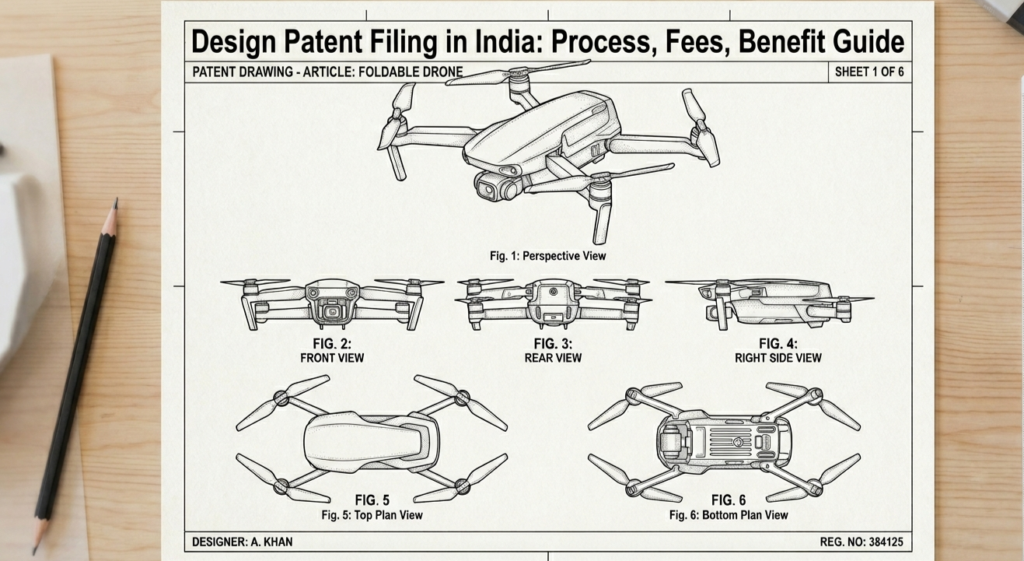
High-quality and accurate representations of the design must be prepared to clearly depict its appearance. Drawings or images should cover multiple views, including:
- Front view
- Back view
- Top view
- Bottom view
- Side views
- Perspective view
Clear and precise drawings are critical because they define the scope of protection granted by the design registration. Ambiguous or incomplete drawings can lead to objections or limit the enforceability of your rights.
- Filing the Application
Once the design is ready, the application is submitted to the Indian Patent Office along with:
- The prescribed application forms
- Drawings or representations of the design
- Applicable filing fees
Upon submission, the applicant receives an application number, which serves as a reference for all future correspondence and tracking of the application.
- Examination
The Indian Design Office examines the application to ensure compliance with legal requirements. Key aspects evaluated include:
- Novelty of the design
- Originality and aesthetic appeal
- Compliance with the Designs Act, 2000 and related rules
This stage ensures that only designs meeting all legal criteria are eligible for registration.
- Objections (if any)
If the examiner identifies any issues during the examination, an Examination Report is issued. The applicant must respond within the prescribed time frame, addressing all objections or making necessary amendments.
Timely and well-prepared responses are critical to avoid delays or rejection of the application.
- Registration and Publication
If the application meets all legal and procedural requirements:
- The design is officially registered with the Indian Patent Office.
- The registration is published in the official designs journal, making it publicly available.
Once registered, the design enjoys exclusive rights for 10 years, with the possibility of extension for an additional 5 years, allowing the owner to prevent unauthorized copying or imitation by competitors.
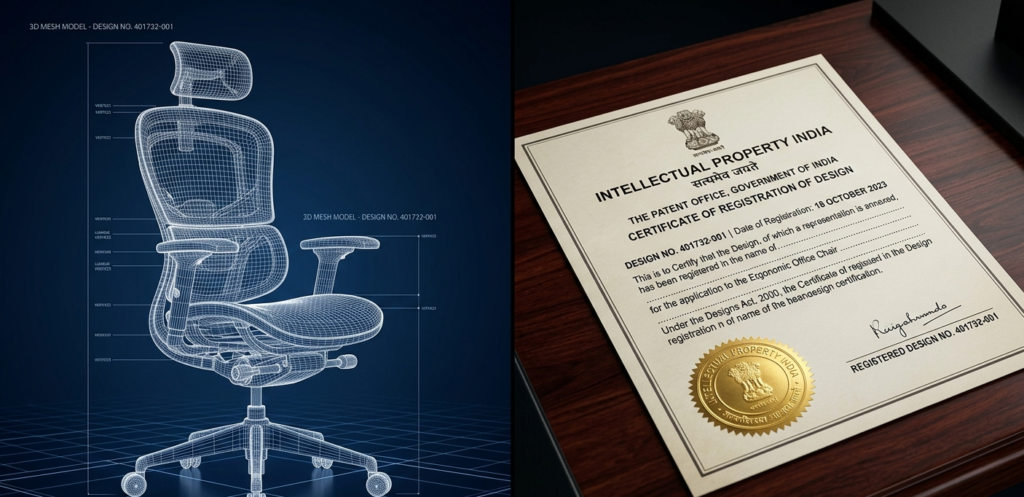
A design registration certificate is issued.
Timeline for Design Registration
The design registration process is relatively faster than utility patents.
Average time: 6–12 months
May vary depending on objections and response time.
Validity of Design Patent in India
Initial validity: 10 years from filing date
Extendable by: 5 additional years
Total protection: 15 years
Cost of Design Patent Filing in India
The cost depends on the type of applicant:
- Individuals / Startups / Small entities → Lower government fees
- Companies / Large entities → Higher fees
Additional costs may include:
- Professional/agent fees
- Drafting and drawing charges
Overall, design patents are more cost-effective compared to utility patents.
Benefits of Design Patent Filing
Common Mistakes to Avoid
Design patents offer several advantages:
- Exclusive Rights – The owner has the exclusive right to use and commercialize the design.
- Prevention of Copying – Legal protection prevents competitors from imitating the design.
- Enhanced Brand Value – Unique designs strengthen brand identity and customer recognition.
- Commercial Advantage – Design protection increases market value and business opportunities.
- Licensing Opportunities – Designs can be licensed or sold for additional revenue.
Many applications face rejection due to avoidable errors:
- Submitting poor-quality drawings
- Not conducting a prior design search
- Including functional features in design claims
- Incomplete or unclear description
- Public disclosure before filing
Avoiding these mistakes significantly improves approval chances.
Expert Tips for Strong Design Filing
To maximize protection and success:
- Focus on Visual Uniqueness – Ensure your design stands out from existing designs.
- Use Multiple Views – Provide comprehensive visual representation.
- Keep Description Simple – Avoid unnecessary complexity in description.
- File Early – File before disclosing your design publicly.
- Seek Professional Guidance – A design expert can help draft and file correctly.
Why Design Protection is Crucial in Today’s Market
In industries such as:
- Consumer goods
- Fashion
- Electronics
- Food packaging
Design plays a critical role in influencing consumer decisions. A unique design can differentiate a product in a crowded market and significantly impact sales.
Without protection, competitors can easily replicate your design, leading to loss of revenue and brand identity.
Conclusion
Design patent filing in India is a powerful and cost-effective way to protect the visual identity of your product. By securing exclusive rights over your design, you not only prevent imitation but also enhance your brand value and commercial potential.
In this blog, we explored the complete process of design patent filing, including legal requirements, step-by-step procedures, timelines, costs, and expert strategies. Whether you are a startup, designer, or business owner, protecting your design is a crucial step toward long-term success.
Final Thought
A great design is more than just appearance—it is a valuable intellectual asset. Protect it early, protect it smartly.