Copyrights and Trademarks as intangible asset: Understanding Their Role begins with a simple yet powerful realization some of the most valuable things in the world cannot be seen or touched. In an era where a single idea can build a global empire and a recognizable name can influence millions; the true drivers of success are no longer confined to physical resources. Instead, they exist in the form of creativity, originality, and identity.
Imagine a bestselling novel that captivates readers across continents or a brand logo that instantly evokes trust and familiarity. These are not merely creative or commercial elements; they are assets intangible yet immensely valuable. They shape perceptions, create emotional connections, and generate long-term economic benefits. This invisible layer of value is what defines modern businesses and distinguishes leaders from competitors.
In today’s digital and brand-driven economy, value is no longer limited to physical resources such as machinery, buildings, or raw materials. Instead, creativity and brand identity have emerged as powerful drivers of success. Businesses, creators, and entrepreneurs increasingly rely on intellectual property to protect their work and establish a competitive edge.
Among the most significant forms of intellectual property are copyrights and trademarks. A common question that arises is: what type of assets are copyrights and trademarks? The answer is that both are classified as intangible assets. Although they lack physical form, they carry substantial economic and strategic value.
This blog explores copyrights and trademarks in detail, explaining their nature, characteristics, importance, and how they function as valuable intangible assets.
Understanding Intangible Assets

Intangible assets are non-physical resources that provide long-term financial benefits to individuals and organizations. Unlike tangible assets such as buildings, machinery, or goods, intangible assets cannot be seen or touched. However, their lack of physical form does not diminish their importance; in fact, they often represent some of the most valuable components of a modern business. These assets can be legally owned, managed, and commercially utilized, making them essential instruments for growth and sustainability.
One of the defining characteristics of intangible assets is their ability to generate value over an extended period. Their worth is not derived from physical presence but from the rights, advantages, and competitive edge they provide. In many cases, intangible assets appreciate as a business grows, particularly when they contribute to brand recognition, customer loyalty, or technological innovation.
Examples of intangible assets include:
- Copyrights
- Trademarks
- Brand goodwill
- Software and digital content
- Patents and trade secrets
The value of these assets primarily stems from legal rights, exclusivity, and market recognition. They enable individuals and organizations to control how their creations, innovations, and brand identities are used by others. This control not only ensures protection against unauthorized use or infringement but also creates opportunities for revenue generation through licensing, franchising, and commercialization.
Additionally, intangible assets play a crucial role in building a strong market presence. For example, a well-known brand or a widely used software platform can leave a lasting impression on customers, leading to sustained demand and revenue. In today’s knowledge-based economy, the effective management of intangible assets is essential for long-term success, making them indispensable for both businesses and creators.
What is Copyright?

Copyright is a legal right granted to creators for their original works of authorship, designed to protect the unique expression of their ideas. While ideas themselves are free for all to use, the way those ideas are expressed whether through writing, music, art, or software is safeguarded by copyright law. This protection begins as soon as the work is created and fixed in a tangible form, ensuring that creators retain ownership and control over their intellectual efforts.
In essence, copyright serves as both a shield and a reward: it protects creators from unauthorized use of their work while also allowing them to benefit financially and professionally from their creativity.
What Does Copyright Cover?
Copyright extends to a broad spectrum of creative and intellectual works across various fields. It encompasses:
- Books, articles, and blogs
- Music compositions and sound recordings
- Films, videos, and photographs
- Paintings, illustrations, and graphic designs
- Software programs and other digital content
The fundamental requirement for copyright protection is originality. The work must be independently created by the author and must demonstrate at least a minimal degree of creativity. This ensures that copyright law encourages innovation while maintaining fairness in protecting genuine creative effort.
Rights Provided by Copyright
One of the most significant aspects of copyright is the bundle of exclusive rights it grants to the creator. These rights empower authors and creators to control how their work is used, shared, and adapted. Specifically, copyright provides the right to:
- Reproduce the work in various forms
- Distribute copies to the public
- Perform or display the work publicly
- Create derivative works, such as adaptations, translations, or modifications
These exclusive rights are crucial in enabling creators to monetize their work. For instance, an author can publish and sell books, a musician can earn royalties from streaming platforms, and a filmmaker can license their content for distribution. By granting such control, copyright ensures that creators are fairly compensated for their efforts.
Copyright as an Intangible Asset
Copyright is widely recognized as a valuable intangible asset because it lacks physical form yet holds substantial economic and strategic importance. Its value is derived not from material presence but from the legal protection and exclusive rights it provides.
Several characteristics make copyright a powerful intangible asset:
- It has no physical existence but represents intellectual ownership
- Its value lies in its ability to generate revenue over time
- It can be licensed, assigned, or sold to others
- It often appreciates in value as the work gains popularity and recognition
For example, a successful novel, a hit song, or a widely used software program can continue to generate income for years, or even decades, through sales, licensing, and adaptations. In many cases, the long-term earning potential of such works far exceeds the initial effort invested in creating them.
In today’s digital age, where content can be easily shared and distributed globally, copyright protection has become even more critical. It not only safeguards creative expression but also supports industries such as publishing, entertainment, and technology. By treating copyright as an intangible asset, individuals and businesses can strategically manage, commercialize, and maximize the value of their creative outputs.
What is a Trademark?
A trademark is a distinctive sign or identifier that enables consumers to recognize and differentiate the goods or services of one entity from those of others. It serves as the face of a brand, representing not just a name or symbol, but the reputation, quality, and values associated with a business. In a competitive marketplace, a trademark acts as a powerful communication tool, instantly connecting consumers with a particular source of products or services.
More than just a legal concept, a trademark embodies the identity of a business. It is what customers remember, trust, and return to, making it a critical element in shaping consumer perception and brand loyalty.
What Can Be Trademarked?
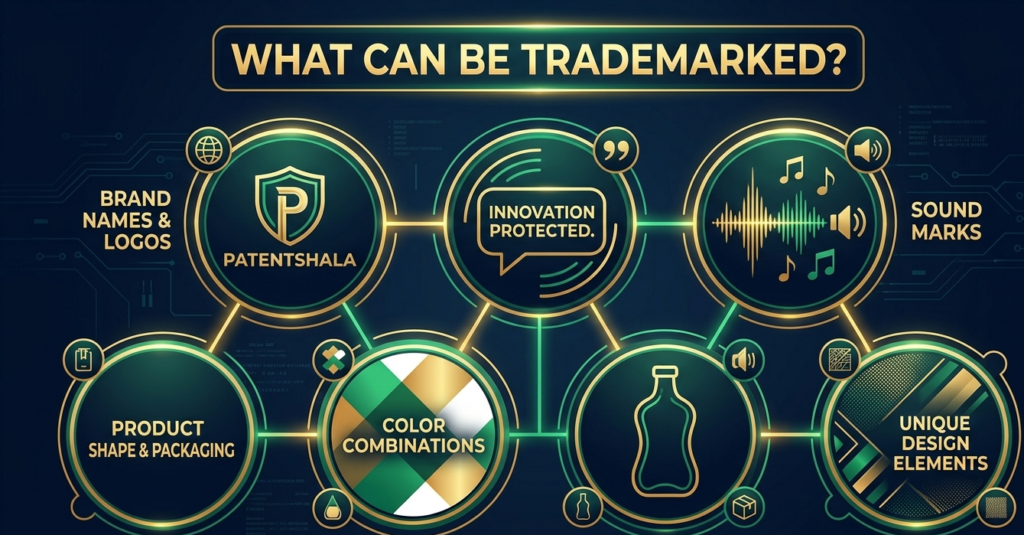
Trademarks can take many forms, provided they are capable of distinguishing one business from another. Common examples include:
- Brand names
- Logos and symbols
- Slogans and taglines
- Unique design elements
In addition to these traditional forms, modern trademark law also recognizes non-conventional marks. These may include distinctive sounds, specific color combinations, product shapes, or even packaging styles, as long as they are uniquely associated with a particular brand. This flexibility allows businesses to creatively establish and protect their identity in diverse and innovative ways.
Importance of Trademarks
Trademarks play a vital role in the success and sustainability of businesses. They are essential for:
- Creating brand recognition: A strong trademark makes it easier for consumers to identify and remember a product or service.
- Building customer trust and loyalty: Consistent use of a trademark signals reliability and quality, encouraging repeat purchases.
- Differentiating products in the market: In crowded markets, trademarks help businesses stand out from competitors.
A well-established trademark acts as a guarantee of origin and quality. For consumers, it reduces confusion and simplifies decision-making. For businesses, it strengthens market positioning and enhances overall brand value.
Trademarks as intangible asset
Trademarks are considered highly valuable intangible assets because their worth lies in the reputation and goodwill they represent rather than any physical form. Over time, as a brand gains recognition and consumer trust, the value of its trademark increases significantly.
Key features that make trademarks powerful intangible assets include:
- Their value is derived from brand reputation, recognition, and goodwill
- They can be commercially exploited through licensing, franchising, or assignment
- They have the potential for indefinite duration, provided they are actively used and periodically renewed
- They often appreciate in value as the brand grows stronger in the market
For example, globally recognized brands derive a substantial portion of their financial worth from their trademarks alone. A strong trademark can open doors to new markets, support brand extensions, and create multiple revenue streams.
In today’s global and digital economy, trademarks are more important than ever. With increasing competition and the rapid expansion of online marketplaces, a distinctive and well-protected trademark can be the key to long-term business success. By treating trademarks as strategic assets, businesses can not only safeguard their identity but also leverage it for sustained growth and profitability.
Key Differences Between Copyright and Trademark
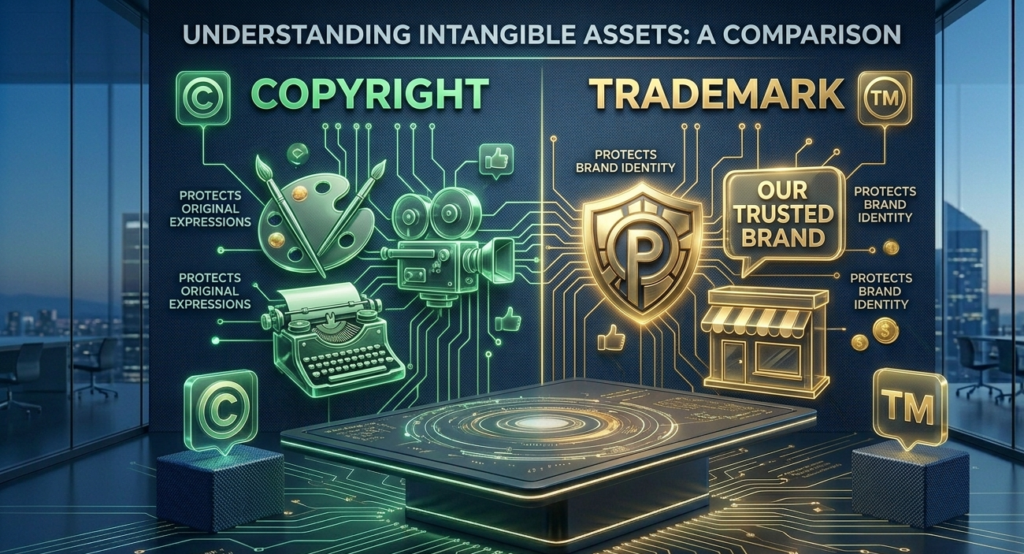
Although both copyright and trademark are forms of intellectual property and are classified as intangible assets, they serve different legal and commercial purposes. Understanding the distinction between the two is essential for creators, businesses, and entrepreneurs.
- Purpose
The primary purpose of copyright is to protect original creative works and the expression of ideas. It safeguards the rights of authors, artists, musicians, and software developers over their creations.
In contrast, a trademark is intended to protect the identity of a brand. It helps distinguish the goods or services of one business from those of another and prevents consumer confusion in the marketplace.
- Subject Matter
Copyright applies to creative and artistic works, such as books, articles, music, films, photographs, paintings, designs, software, and digital content.
Trademark protection, on the other hand, applies to brand identifiers, including names, logos, symbols, slogans, taglines, and sometimes even sounds, colors, or packaging styles.
- Duration of Protection
Copyright protection is granted for a limited period. In most jurisdictions, it lasts for the lifetime of the author plus a specified number of years after their death.
A trademark can potentially last indefinitely, provided it continues to be used in commerce and is renewed according to legal requirements.
- Primary Focus
The focus of copyright is creativity and original expression. It aims to protect the intellectual and artistic efforts of creators.
The focus of a trademark is branding, recognition, and market identity. Its purpose is to help consumers identify the source and quality of goods or services.
Despite their differences, both share several important characteristics:
- Intangible Nature
They do not have a physical form but hold significant value.
- Legal Protection
Both are protected by law, allowing enforcement against unauthorized use.
- Economic Value
They can generate revenue through licensing, sales, and commercialization.
- Transferability
They can be assigned or licensed to others.
Why Copyrights and Trademarks Matter
- Protection of Rights
They ensure that creators and businesses retain control over their work and identity.
- Revenue Generation
They enable monetization through licensing, royalties, and branding.
- Competitive Advantage
They prevent competitors from copying or misusing intellectual property.
- Brand Building and Recognition
Trademarks, in particular, help establish a strong market presence.
Challenges in Managing These Assets
While copyrights and trademarks are valuable, they also come with challenges:
- Risk of infringement or unauthorized use
- Legal complexities across different jurisdictions
- Costs associated with registration and enforcement
- Need for continuous monitoring and renewal (especially trademarks)
- Proper management is essential to maximize their value and ensure protection.
Conclusion
Copyrights and trademarks are intangible assets that play a vital role in protecting creativity and brand identity. While copyrights safeguard original works, trademarks ensure that businesses can build and maintain a unique identity in the marketplace.
In today’s knowledge-driven and brand-conscious world, these assets are not just legal tools they are strategic resources that drive growth, innovation, and long-term success. Understanding and effectively managing copyrights and trademarks can help individuals and businesses unlock their full potential in a competitive environment.
Final Thought
In a world where ideas shape industries and brands define success, copyrights and trademarks stand as silent yet powerful drivers of value. They transform creativity and identity into lasting economic assets, giving businesses and creators a distinct edge. Those who understand and strategically manage these intangible assets are better positioned to innovate, compete, and thrive in an ever-evolving global marketplace.
Protect Your Idea 🚀
Start your patent journey today
⚡ Free Consultation • No Hidden Charges